

 Skip to content
Story by Melanie Jones
Six dogs may seem like enough for any couple, but every so often Pam and Seth Bowdoin temporarily expand their furry family by as many as nine at a time.
Pam and Seth foster puppies, sometimes full litters, for Rex’s Animal Rescue. The organization is grateful for the help. “We love Pam,” rescue founder Alisa Rex says. “She is so precious. She loves puppies and litters specifically.”
Pam’s first fostering experience came with a litter. She took in a rambunctious heeler that was two weeks away from delivering her puppies. The dog, named Layla, chewed through her crate and the bathroom door, and she gnawed up the carpet. She gave birth, and when the puppies were old enough, they went to good homes. But Pam and Seth couldn’t give up Layla, and she became the couple’s sixth dog.
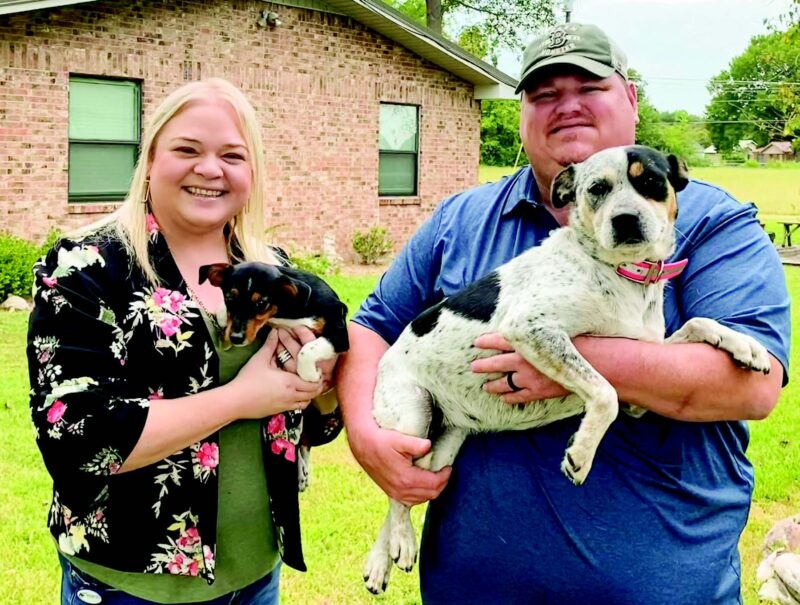
“My husband was like, ‘She’s not going anywhere,’” Pam says. “‘She’s already torn up the house. Now she doesn’t have to go tear up anyone else’s house.’”
That was a little over two years ago, and the couple has fostered over 34 puppies since. Given that they sometimes go months at a time without fostering, that’s a lot of puppies at once.
“Alisa will call and ask if I can take six puppies,” says Pam, who works at Peoples as a project manager. “Then it turns out to be nine. Now, six is very different than nine, but I just can’t say no.”
On one occasion, Alisa called for Pam to take in puppies when Seth was sick. “My husband was in ICU when I drove to pick up puppies,” she says.
What is the driving force behind it all? “I just love animals,” Pam says. Fostering lets Pam love on as many pets as possible without having to provide a permanent home. “It is the roughest thing when you give them up,” she says. “But it’s so great to see them go to good homes.”
The website for Rex’s Animal Rescue includes a page where adoptive owners can post photos of their rescued pets, and Pam enjoys checking it to see her past fosters thriving in their new homes. On occasion, a friend or someone in town will adopt one, so she gets to see the dog in person sometimes.
Fostering has become so much a normal part of Pam’s life she must take a minute to remember how it all started. “I saw something, I think it was on Facebook, someone had posted a photo of a pregnant dog and asked if someone could take her in,” she recalls. “Without even asking my husband, I said, ‘I will.’” That dog turned out to be Layla, the one Seth insisted they adopt. “He’s a bigger sucker than I am,” Pam says.
Alisa says fostering animals is important for reasons beyond sparing them from being euthanized or languishing in a shelter. “It’s to prepare a dog for their new family,” she says.
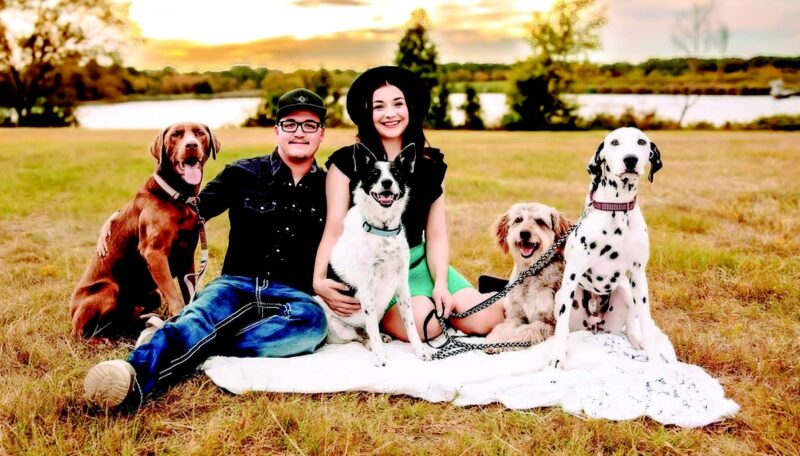
Dogs get used to living in a home setting where people love them and play with them. They often have a chance to interact with other dogs or cats, or even babies and older children. That makes them better able to adjust to their forever homes.
But finding people like Pam isn’t easy. “It’s one of the biggest challenges we face,” Alisa says. “We struggle really hard to find foster families.” The guidelines for being a foster family are pretty much the same for adopting a dog. Foster families must have a fenced area in the yard or be able to walk the dogs on a leash a few times a day. Any pets in the household must be current on their vaccines, be treated for heartworms and be spayed or neutered.
It’s not necessary for foster families to have pets, “but it’s great if they do,” Alisa says, to get the animals used to being around others.
While there are some families, like Pam’s, who get attached and want to adopt one of their foster dogs—sometimes called a “foster fail”—Alisa says that situation is relatively uncommon. “Most are pretty good about getting the dogs adopted out,” she says. Some foster families are even helpful in finding the dogs’ forever homes. “If they have the ability to take a dog out and get that exposure and talk to people about what we’re doing, then absolutely it helps.”
Pam encourages people to follow her example and foster a pet. “It is a lot of work, a lot of time, but it’s definitely worth it, especially if you do one at a time,” she says. “I mean, if you have other dogs, what’s one more?” She admits it isn’t always easy. “It’s temporary,” she says. “So, if it’s a little uncomfortable for a while, it’s worth it for a dog to have a chance to find a loving home instead of being killed or living in a shelter for years.”